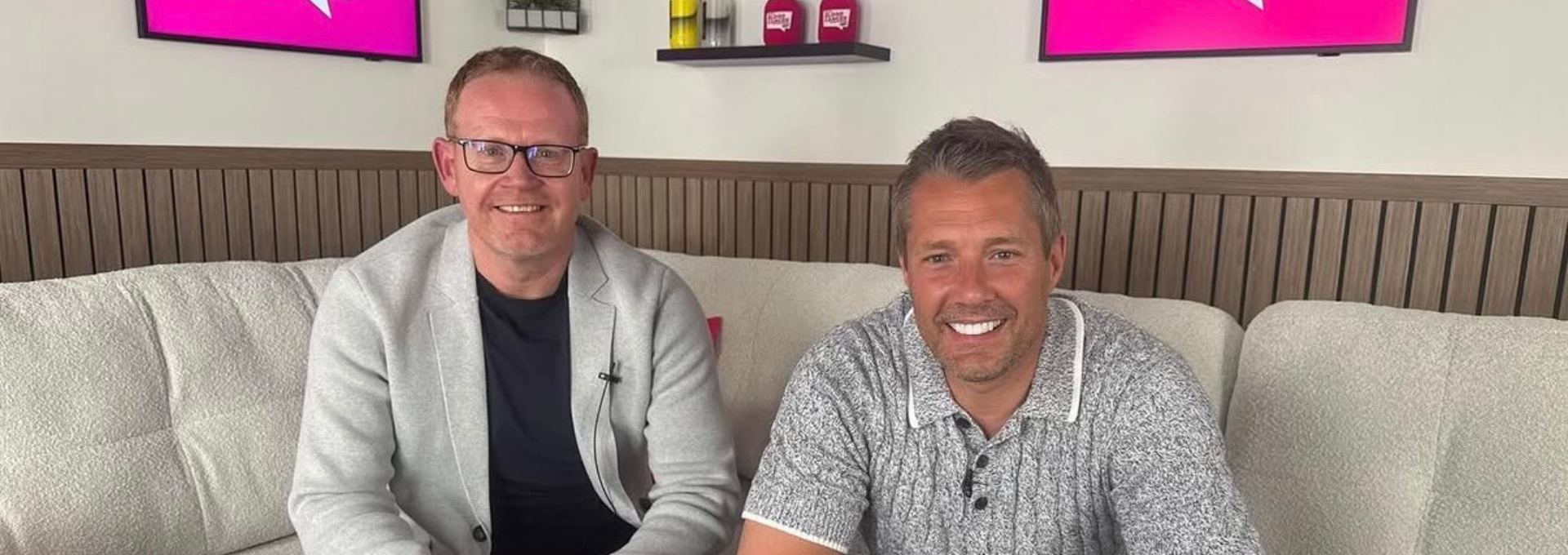
James McLaughlin – “We were an hour from going bust”
In the latest episode of Cure Leukaemia’s Let’s Talk Blood Cancer: The Patients Podcast, host Adam Joyce sits down with James McLaughlin, Chief Executive Officer of Cure Leukaemia since 2012.
Since joining Cure Leukaemia (CL) in 2012, James has witnessed the charity’s transformation from a small regional organisation into a nationally recognised charity. Today, Cure Leukaemia is the charity partner of Sir Chris Hoy’s Tour de 4, hosts fundraising events featuring some of the biggest names in sport, and is a house-hold name among the haematology community.
Why Cure Leukaemia?
Before receiving the “tap on the shoulder” to become CEO of Cure Leukaemia, James was Commercial Director at Edgbaston Cricket Club. It was there that he was first introduced to the charity through former England cricketer, Ashley Giles, who encouraged him to meet Cure Leukaemia co-founders, Professor Charlie Craddock and Graham Silk.
Meeting Charlie and Graham left a lasting impression. James immediately recognised their passion and determination to improve outcomes for blood cancer patients through clinical research and innovation.
Following those conversations, James made Cure Leukaemia Edgbaston’s official charity partner and later joined the charity’s Board of Trustees. After one trustees’ meeting, he received the opportunity to lead the organisation into its next chapter as CEO.
The Advantage of a Marketing Background
Having built his career in sports marketing with organisations including Watford FC, Nike, Southampton FC, Warwickshire CC and Edgbaston, James believes his commercial background gave him a valuable perspective when stepping into the charity sector.
“A charity is still a business. We want to generate money – it’s what we do with that money that makes the difference.”
For James, one of the most rewarding aspects of the role is seeing the direct impact of the charity’s growth and fundraising efforts, “this work has a tangible return.”
Whether it’s seeing clinical trials become standard treatments or watching programmes such as the ATICUS Network come to life, James is motivated by the charity’s ability to deliver measurable improvements for patients.
“There’s continuous improvement and growth – exactly what you would want to see in any successful organisation.”
The Motivation
“It’s always about bringing it back to the patient.”
Visiting hospitals and haematology centres across the country allows him to see first-hand the difference the charity’s work is making and hear directly from patients about what matters most to them. “You see and hear first-hand what patients need and what is making a difference.”
That connection provides constant motivation. No two weeks are ever the same, and James believes that continual challenge is an important part of leadership, “If I felt I was treading water, then I’m not doing my job.”
What Does Success Look Like?
For James, success starts with one simple objective: keeping the funding flowing.
Working in the charity sector means there are no guarantees. Every year presents new challenges, and past success does not automatically lead to future results.
“This is where my background in sport has helped me. I’ve seen how you can be top of the league one year and bottom the next.”
One of his proudest achievements was securing support from Deutsche Bank in 2017., “although it almost killed us as a team of five.”
The partnership enabled Cure Leukaemia to fund the Trials Acceleration Programme (TAP), significantly increasing the charity’s ability to support life-saving clinical trials,”for me, that started the drug of winning”.
Another defining moment came in 2021 with Tour 21. Following the disruption caused by COVID-19, there were serious concerns that the event would be cancelled for a second consecutive year. “We were about an hour from going bust when we received the call that France had changed its regulations.”
The change allowed participants to travel and complete the challenge, “If that event hadn’t happened in 2021, then Cure Leukaemia wouldn’t be here today.”
What Does the Next Five Years Look Like?
For James, long-term success is not solely built on major fundraising events. It is about creating a sustainable organisation that can continue to grow its impact year after year.
With increased funding, Cure Leukaemia will be able to support more research nurses, open more clinical trials and expand access to those trials across the UK, “equity of access should be there for everyone, not just people who live in a major city.”
One of James’ biggest ambitions for the next five years is the continued development of the ATICUS Network, helping to accelerate access to less toxic treatments for children battling blood cancer.
“At the moment, we are failing children and their parents by not having enough ATICUS funding.”
For James, ensuring more children can access innovative treatments closer to home would represent one of Cure Leukaemia’s most important achievements yet.