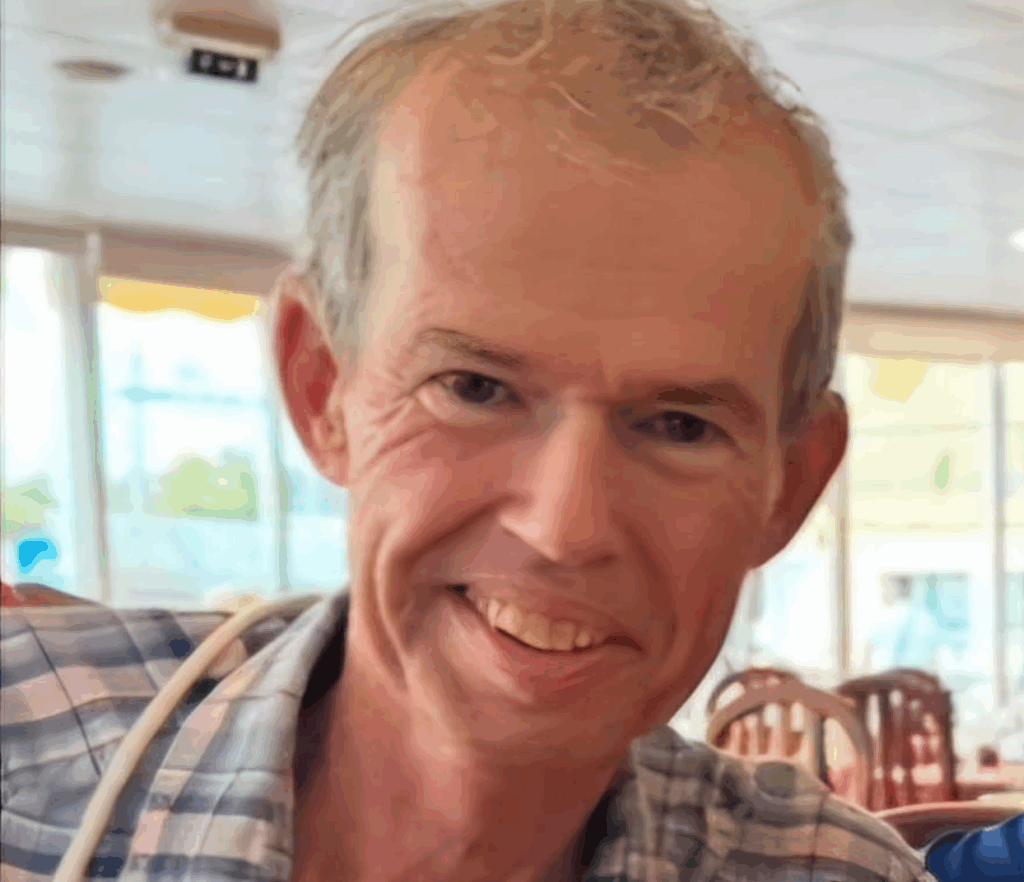
In 1999, Jonathan was diagnosed with Polycythaemia Vera (PV) at the age of 38 and was successfully treated. For years, his health remained stable, allowing him to continue leading an active life. However, everything changed in 2023 when Jonathan began experiencing significant weight loss, fatigue, weakness, and generally feeling unwell.
After visiting his GP, Jonathan visited his GP and consulted with the haematology team at Llandough Hospital, who treated his PV, where further tests, including blood work, a CT scan, and a bone marrow biopsy, revealed the news—his PV had progressed to Myelofibrosis, a rare and serious condition that affects the bone marrow. Jonathan’s disease was categorised as intermediate risk group 1, and beside the other symptoms he was in considerable discomfort from an enlarged spleen pressing on other organs.
Despite the severity of his condition, Jonathan’s age and stage of the disease meant that he didn’t qualify for any standard treatments. “If I had been just two years older, I would have qualified for the standard treatment. But instead, my only option was a clinical trial,” Jonathan explains. At first, he was unsure about clinical trials and felt forced into it due to the lack of alternatives. However, in retrospect, he is incredibly thankful for the opportunity.
In August 2023, Jonathan was recruited to the FEDORA Clinical Trial at the University Hospital of Wales Cardiff, a TAP-funded centre. The trial involved a daily medication called Fedratinib, combined with bi-weekly injections of Ropeginterferon, which gradually increased in dosage over time. The trial’s potential benefits made it his best shot at recovery.
“I feel 100% better than I did before,” Jonathan says, describing the dramatic improvement in his health. “My spleen has shrunk, I’ve gained back the weight I lost, and the fatigue is practically gone. I’m feeling better than I’ve felt for some time.”
Before joining the clinical trial, Jonathan had been sceptical about its potential. However, his experience has completely changed his outlook. “I felt forced into it, but looking back, I realise how lucky I am to be on this trial. It’s given me a second chance at life,” he reflects.
Jonathan’s treatment regimen includes regular check-ups, blood tests and ultrasounds and bone marrow biopsies every six months. His most recent bone marrow biopsy showed no progression of the disease, a relief for him. “In my most recent biopsy, they found no progression, which is the best news I could have asked for,” he says.
Jonathan has been astounded by the care and support he’s received throughout his clinical trial journey. “The team at UHW Cardiff has been amazing. The care has been incredible, and being part of a trial like this has given me hope. Without clinical trials, there’s no progress. There are no new treatments, and without them, people like me wouldn’t have a chance.”
Looking forward, Jonathan feels stronger and more hopeful about the future. His experience with the FEDORA Clinical Trial has not only transformed his health but also given him a renewed perspective on the crucial role clinical trials play in advancing treatment options for those facing life-threatening conditions.
Thank you for reading Jonathan's Story
Read our inspiring patient stories
Lee’s Story
Abigail’s Story
Christine’s Story
Steve’s Story
Alyssa’s Story
Hughie’s Story

Morgan’s Story
Kathryn’s Story
Elizabeth’s Story