Celebrating International Nurses Day
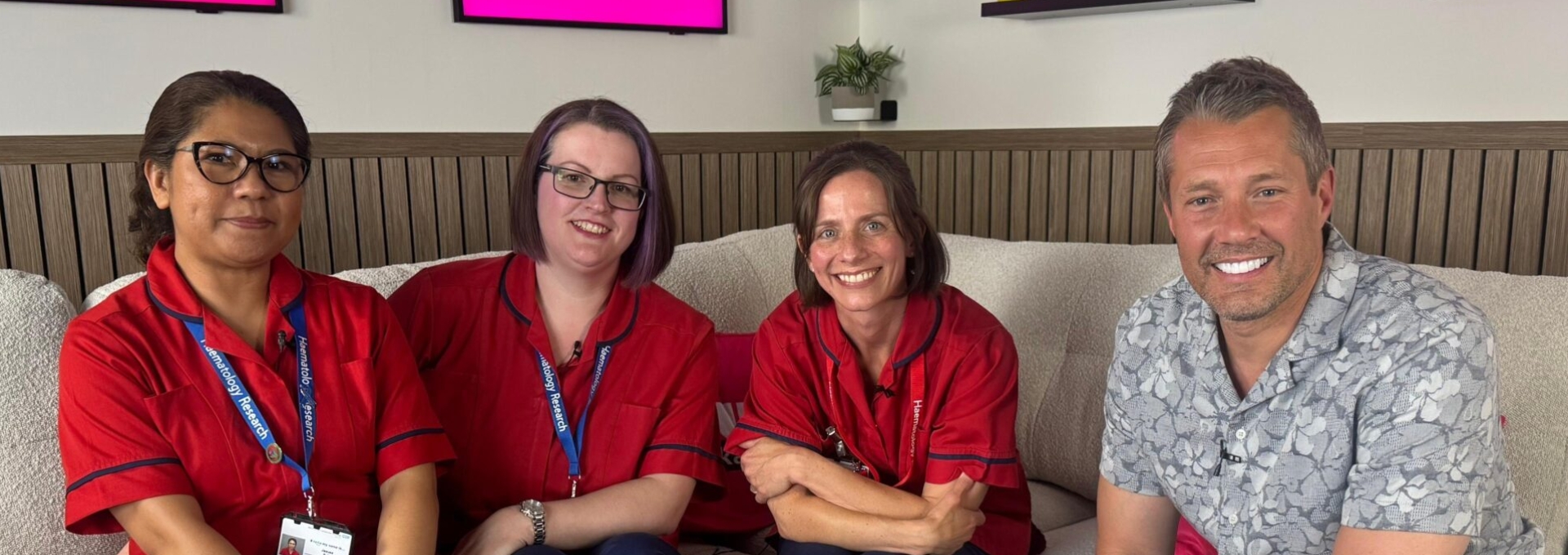
In the latest episode of Cure Leukaemia’s Let’s Talk Blood Cancer: The Patients Podcast, host Adam Joyce sits down with Jesusa (Jes) Sulit , Sian Fowdur, and Abi Sutcliffe, three Clinical Research Nurses at Nottingham University, Haematology Ward.
What Is A Clinical Research Nurse?
Clinical research nurses play a crucial role in delivering clinical trials safely and effectively. They coordinate and manage studies, ensuring that every stage of a trial follows strict Good Clinical Practice (GCP) guidelines and approved protocols. Their work helps bring new treatments to patients while ensuring patient safety remains the top priority.
For Jes, the role is very different from working on a hospital ward. While ward nursing can be physically demanding, research nursing is often more mentally intensive. “There is a stop on the ward — you come back the next day and there will be different patients with different needs”.
The role of a research nurse “is more of a long-term commitment.” Research nurses may work with the same patients for five or six years, supporting them from the moment they sign a consent form to take part in a clinical trial.
For many patients, research nurses become “navigators” throughout the trial process, guiding them through appointments, monitoring their wellbeing and providing reassurance during treatment.
Why Are Research Nurses So Vital?
Research nurses are central to the success of clinical trials. By recruiting and supporting patients, they help ensure people can remain on treatments safely for as long as possible. This allows valuable data to be collected and shared with drug companies and researchers, helping improve future treatments.
For Sian one of the most rewarding aspects of the role is seeing how research changes patient care over time.
“The drugs that were not available 15 years ago are now standard care for our patients. Today’s research is tomorrow’s standard of care — and I’ve seen that play out.”
Advances in research have transformed treatment options for patients, from less toxic therapies to tablets that can be taken at home instead of in hospital. This has meant that “Treatment now fits into life, rather than life fitting into treatment”.
Improving Outcome For Patients
Abi explained that the number of research nurses available can directly affect how many clinical trials a hospital is able to run.
“Sometimes we have to say no to a trial that could benefit patients because we don’t have the capacity for another nurse to oversee it”.
Research nurses are responsible for recording highly detailed information about each patient during a trial, including side effects, symptoms and how patients respond to treatment.
Each patient visit involves careful monitoring and assessment. “One of the benefits of having a research nurse who has been with you all the way through is that they may notice something you haven’t”.
Clinical Trial Misconceptions
Some patients are initially hesitant about taking part in clinical trials, fearing they are “signing their life away” or that data collection takes priority over patient care. Research nurses say advocacy is one of the most important parts of their role.
“Data is important in the development of new drugs, but for us the patient is the priority in everything we do.”
What Would A Trial Look Like Without Research Nurses?
Abi believes many of the clinical trials carried out at Nottingham hospitals would not be possible without research nurses.
She described trials as a collaborative effort between doctors and research nurses, with both professions relying on each other to deliver safe and effective care.
“A trial would not be able to operate without both, and without the mutual respect between those roles.”
The Emotional Challenges Of The Role
“We can receive information that your patient is not doing very well with the trial, you do get emotional. We are just human so it is natural that we are their pain”.
However, it works both ways, when patients receive good news research nurses are elated having gone through their journey with them. “When you see the radiology report that says no sign of disease and you get the all clear of a complete remission”.
Why Nursing?
Abi says the most rewarding part of the role is being able to care for people while knowing her work can have a lasting impact on patient treatment. “What really drives me is seeing a drug that was once part of a clinical trial become the standard of care. You know you’ve helped make a real difference.”
For Sian, the greatest reward comes from seeing patients experience faster and more positive outcomes through new treatments. “You can’t always buy forever, but it can buy the quality family moments”.