“This is as bad as it gets, but it got worse”
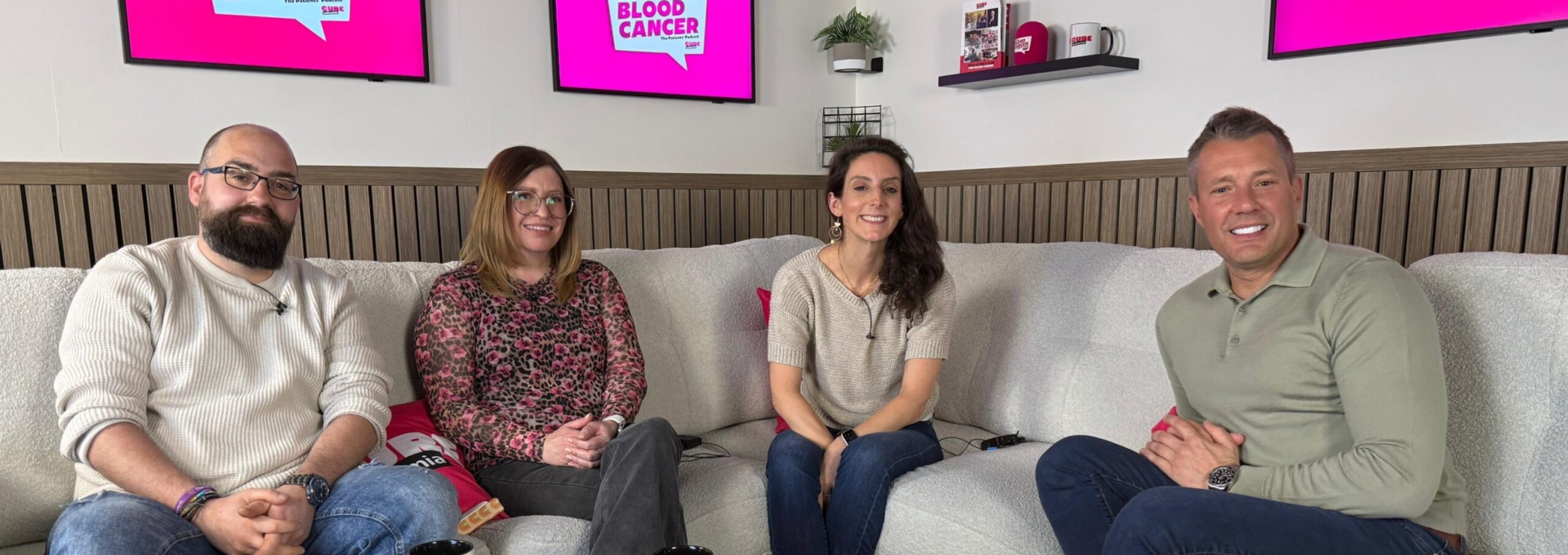
In the latest episode of Cure Leukaemia’s Let’s Talk Blood Cancer: The Patients Podcast, host Adam Joyce sits down with, Luke and Lauren Parker alongside Consultant Paediatric Haematologist Dr Gemma Barnard to discuss their daughter Isla’s journey through Acute Myeloid Leukaemia (AML).
Isla’s Diagnosis
Before her diagnosis, Isla was everything and more to her parents, “she was bright, active and very friendly and she just wanted to learn.”
In late 2024, Isla began resisting going to school, “she would kick up a fuss about going,” Lauren remembers. “Then all of a sudden she started saying her legs were hurting.” At first, her parents assumed it was an excuse to get out of school, but then one morning, Isla became so upset that Lauren carried her to school herself.
The following day, she noticed bruises on Isla’s legs, “they were exactly where I’d been holding her.” Concerned, they booked an appointment with their GP.
The GP immediately arranged blood tests, although at the time nobody knew exactly what they were looking for, from then everything began to move quickly. “I think they wanted to be sure of their suspicions before they told us,”.
Then came the diagnosis. Acute Myeloid Leukaemia.
Delivering the news of a Diagnosis
As a Consultant Paediatric Haematologist , Dr. Barnard has had countless conversations with families facing devastating diagnoses. “Any time you deliver bad news, it takes time to sink in.” The challenge is balancing honesty with compassion.
“You don’t want to overload parents with too much information at once, but I think it’s important to take parents away from their child so they can properly understand what’s being said.”
Most importantly, it’s about being clear. “I think using the word ‘cancer’ is important because people understand that.”
It went from bad to worse
“We remember the drive to Oxford, all we were thinking about was getting Isla there and making sure she was comfortable.” Treatment began almost immediately with intensive chemotherapy. For Lauren, one of the most important lessons was allowing space for difficult emotions, “I think sometimes positivity can be toxic.”
Rather than pretending everything was okay, she wanted Isla to know they were experiencing the journey alongside her. “I wanted her to know we were sad with her and that she wasn’t alone.”
One of the most difficult complications Isla experienced was severe mucositis, a painful side effect of chemotherapy that causes inflammation and ulceration throughout the mouth and digestive tract. It began with a small cut on her lip. The bleeding, combined with mucus build-up, became so severe that her mouth effectively sealed shut.
“Isla couldn’t talk”. Lauren remembers medical staff telling them the complication was among the worst they could see during treatment. “I remember everyone saying, ‘This is as bad as it gets.’”
Treating Isla’s AML
Doctors soon discovered that Isla’s AML was particularly aggressive. Chemotherapy alone was unlikely to be enough. From early in her treatment, clinicians believed she would almost certainly require a stem cell transplant.
That is when she was referred to Dr. Gemma Barnard. Then another setback arrived. During Isla’s second round of chemotherapy, doctors discovered traces of leukaemia in her brain.
Fortunately, after further chemotherapy, they disappeared. But the journey remained unpredictable. One night, Isla developed a severe coughing fit that caused a blood clot to burst.
“There was blood everywhere,” Lauren remembers, after returning to the hospital at 4am, she was met by a corridor full of clinicians gathered outside Isla’s room.“It was terrifying.”
Meeting Dr. Barnard
Once doctors confirmed there was no detectable leukaemia in Isla’s spine or bone marrow, she was quickly referred to Addenbrooke’s Hospital to begin preparations for a stem cell transplant. On the very day Isla was admitted to begin conditioning treatment, she experienced sudden hearing loss.
For Dr. Barnard “Knowing she’d previously had leukaemia deposits in her brain, I was immediately worried it had come back,”
At the time, many clinicians felt Isla’s prognosis remained extremely poor. “The general opinion was that her leukaemia wasn’t curable,” Dr. Barnard explains.
Drawing on her background in oncology, Dr. Barnard began considering another option. Radiotherapy. Her idea was highly unconventional for a child with Isla’s specific circumstances. “This was something that had never been done before in the UK”.
The decision represented both a risk and an opportunity.
Two Transplants
Despite everything Isla had already endured, her stem cell transplant journey proved to be one of the most challenging chapters of all. Her first transplant failed, doctors had initially used umbilical cord stem cells.
“When using cord blood, you don’t necessarily want a perfect match,” A degree of mismatch can create what doctors call a graft-versus-leukaemia effect, where donor immune cells actively attack any remaining cancer cells.
Unfortunately, in Isla’s case, the transplant did not take hold. Weeks passed without her body producing new blood cells. For six weeks, Isla remained isolated in a hospital room with only her parents beside her.
Then came a second transplant, this time, the donor was much closer to home. Her mother, Lauren.
The importance of ATICUS
Isla’s treatment journey highlights the importance of clinical research and collaboration, in the form of The ATICUS network, a clinical trials network focused on children with blood cancer undergoing stem cell transplants.
“There are so many brilliant minds out there creating treatments, but trials are rarely for children”.
“We often have to beg, borrow and steal treatments for children.” For clinicians like Dr. Barnard, the motivation is simple. “Kids like Isla have an incredibly bright future ahead of them.”
Looking Forward
Isla has passed the six-month milestone following her successful stem cell transplant and is currently not receiving any active treatment.
There are still challenges ahead. The long-term effects of treatment mean she may require medical support to go through puberty and is unlikely to be able to have children of her own. Her family knows there are no guarantees, “she’s not out of the woods yet.”
“We don’t know what the future holds.” But after everything they have faced together, there is confidence in how they will meet whatever comes next. “We’ll get through it together.”