Dr Katharine Patrick – “The Bottom Falls out of their World”
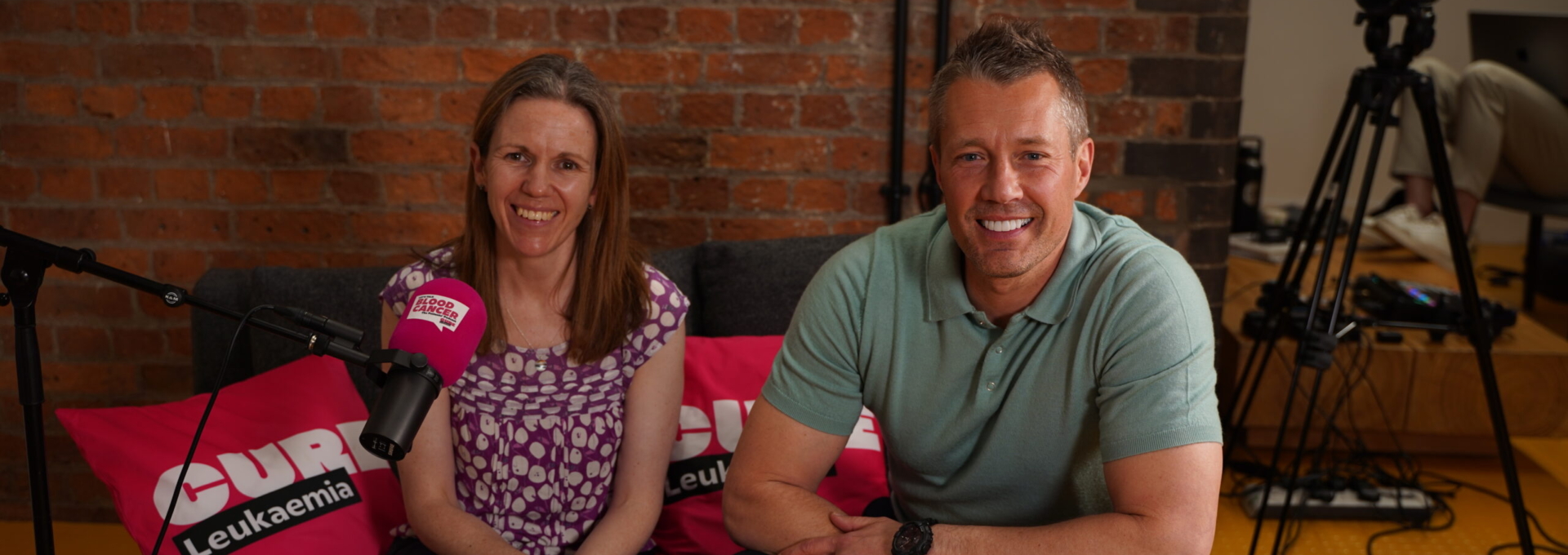
In the latest episode of Cure Leukaemia’s Let’s Talk Blood Cancer: The Patients Podcast, host Adam Joyce sits down with Dr. Katharine Patrick, Consultant Paediatric Haematologist at Sheffield Children’s Hospital.
Why Paediatric Haematology?
“As a teenager I decided I wanted to do medicine, no one in my family worked in medicine, but I wanted a job where I could work with people” but Haematology was never part of the original plan.
“I thought I would become an adult haematologist”, but everything changed during a six-month placement in paediatric haematology. Dr Patrick recalls that she didn’t have one defining moment when her interest shifted to paediatric haematology, “but over those six months I saw the resilience in children and their amazing ability to bounce back and see the positives that are happening.”
For Dr Patrick, it was the relationships she built with patients and their families that ultimately convinced her. “We see those children all the way through their treatment journey.”
While the specialty brings many rewarding moments, it also comes with immense emotional challenges. “There are a lot of really good days at work, but also some really difficult days.”
“We have a huge team of people who support patients and families, but we also all support one another.”
Speaking to Patients and their Families
One of the most difficult conversations Dr Patrick has is telling parents their child has leukaemia, “when a family finds out their child has blood cancer, the bottom falls out of their world.”
Part of her role is helping families process what that diagnosis actually means.
“When you tell a family their child has leukaemia, they can’t really hear or understand what you have said at first.”
Every family responds differently, some people want to know everything and have lots of information. “Others don’t want much information at all – they just want to know what they need to do for their child, and that’s what they’ll do.”
“A lot of it is about tailoring the way we speak to families.” When explaining chemotherapy to younger children, Dr Patrick finds it best to keep the message simple.
“We talk to them about their blood cells, what healthy cells look like and the bad cells that are making them feel poorly. Then we explain how the medicine we’re giving them will help them feel better.”
Recognising Leukaemia
“Leukaemia is something that comes on quite quickly. It isn’t something that has gone on for months and months before someone has a blood test.”
Symptoms can include bruising, tiredness, weakness, pain and feeling generally unwell, but these are all common symptoms seen in many childhood illnesses, particularly viral infections.
“As parents, people often feel guilty that they haven’t found out quickly enough.” Dr Patrick is keen to reassure families that this guilt is often misplaced because the symptoms are so non-specific.
Common Misconceptions
For many families, “when you hear the word cancer, you fear the worst.”
However, childhood blood cancers are now highly treatable, ”the majority of children with blood cancer will be cured.”
Dr Patrick believes many people are unaware of just how far treatment has advanced, “it’s not realised how successful modern-day therapy can be in curing children.”
During this time Dr Patrick finds that older children and teenagers often become heavily involved in their own care, almost to the point that they are “experts in the condition and the treatment.”
The importance of being Active
Alongside medical treatment, Dr Patrick is passionate about encouraging children to stay active throughout their journey.
“There is really good evidence that if you can keep children moving while they’re in hospital, they can get out of hospital earlier than those who stay in bed.”
She is equally passionate about staying active herself, with running and cycling becoming an important way of maintaining balance away from work.
“We have to be able to come back to work the next day and keep going.” So staying active, having supportive colleagues and spending quality time with her family helps ensure the emotional demands of the job do not overwhelm everyday life.
Taking on the Route
This summer, Dr Patrick will take on one of cycling’s toughest challenge, The Route, riding the entire Tour de France Femmes Avec Zwift route one day ahead of the professionals over nine days.
She first became aware of the challenge after taking part in Cure Leukaemia’s Run the Nations event last September. When looking at charities website she had realised that Professor Rob Wynn had previously taken on the Tour 21.
“I mentioned it to James (Cure Leukaemia’s CEO) and he was really enthusiastic. He put me in touch with other people who had done the event.” Hearing how amazing the event was Dr Patrick struggled to find a reason not to take part.
Now, with months of training behind her, she admits she’s “feeling excited, but also terrified.”
Fundraising for The Route
Dr Patrick has already raised an incredible £12,474 ahead of her challenge this summer.
One of her fundraising highlights was Sheffield Children’s Hospital’s “Do It For You Day”, where five static bikes were linked together so children receiving treatment could join in with the cycling challenge.
The money raised will support the ATICUS Network, helping to expand access to non toxic, clinical trials for children undergoing stem cell transplants.
Currently, many new drugs have already been shown to work safely in adults but cannot be routinely used in children until dedicated paediatric clinical trials have taken place.
The ATICUS Network aims to make those trials easier to deliver by providing a national infrastructure, allowing pharmaceutical companies to roll studies out across multiple hospitals rather than approaching individual centres separately.
For Dr Patrick, improving access to new treatments is another way of ensuring children diagnosed in the future have even better outcomes.