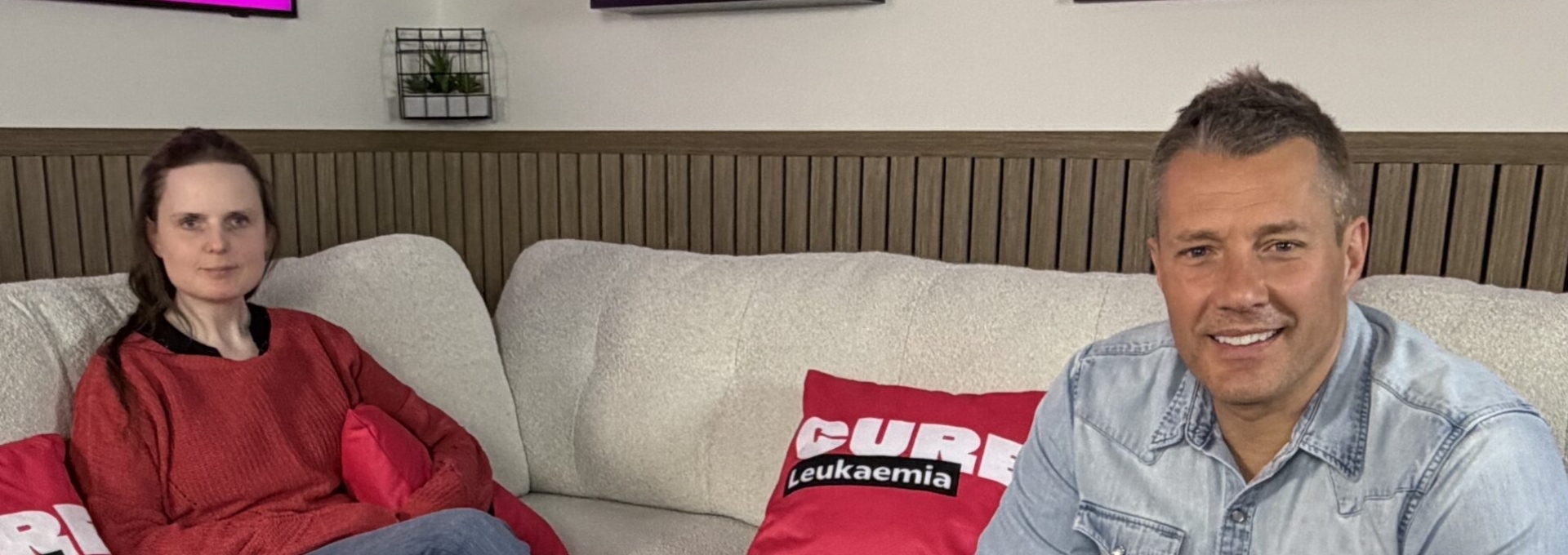
Lizzie Dean – The Clinical Trial Saved My Life
In the latest episode of Cure Leukaemia’s Let’s Talk Blood Cancer: The Patients Podcast, host Adam Joyce sits down with Lizzie Dean to share the story of her battle with Acute Myeloid Leukaemia (AML) and the clinical trial that ultimately saved her life. In the episode, the following is covered:
Lizzie’s Symptoms
In 2014, Lizzie was in her mid-twenties and unaware of the warning signs of blood cancer. Her symptoms began with unexplained bruising that appeared without injury. A few weeks later, she developed a persistent sore throat and was treated for tonsillitis by her GP.
However, her health continued to decline. Lizzie experienced extreme fatigue that forced her to take time off work. She later noticed small red “pin-prick” dots on her skin and began suffering from lower abdominal pain. Doctors attributed the rash to a possible allergic reaction to her tonsillitis medication and suggested the stomach pain may have been caused by an ulcer linked to that reaction.
Each symptom was assessed individually and given a reasonable explanation. At no stage was blood cancer suspected.
Lizzie’s condition worsened. She became breathless moving around her home and recorded an unusually high resting heart rate of 120 beats per minute. After phoning 111, she was told to go to A&E immediately.
Blood tests revealed alarmingly high white blood cell levels and critically low red blood cells and platelets. On the same day, she was diagnosed with Acute Myeloid Leukaemia (AML).
Reflecting on the shock of her diagnosis, Lizzie said, “I thought leukaemia was something children have and cancer is something older people have.”
Lizzie’s Treatment
Lizzie began chemotherapy the day after being diagnosed. Her treatment plan involved intensive chemotherapy delivered in weekly cycles.
Initially, the aggressive approach was successful, and Lizzie went into remission. However, six months later, a routine blood test confirmed she had relapsed.
She was transferred to the Queen Elizabeth Hospital in Birmingham for a stem cell transplant. The treatment, which included radiation, had significant physical effects. At one stage, Lizzie became so weak that she was unable to lift her arm.
Following the transplant, Lizzie was in remission again. Six months later, she relapsed for a second time.
Doctors warned that the transplant may have been her last option and told her she might have only two months to live. Shortly afterwards, she was offered a place on a Phase 1 clinical trial. The expectation was that it could extend her life by three to six months.
The trial treatment was less physically demanding than her previous therapies. Lizzie attended the hospital for seven consecutive days each week to receive an injection and took a tablet at home as part of a six-week treatment plan. After three cycles, tests showed she was in remission. After a further three cycles, she remained cancer-free.
Due to her positive response, the trial continued. In total, Lizzie completed 18 cycles over two years before choosing to stop treatment.
After five years of treatment, Lizzie was told by her doctors that it was time for her to live her life.
Looking Forward
Lizzie credits access to clinical research for giving her options when standard treatments had failed. She has since supported the work of Cure Leukaemia, highlighting the importance of funding innovative trials for blood cancer patients.
Having spent five years in treatment, Lizzie’s focus is now on returning to normality and wants to ensure others have the same chance she had.