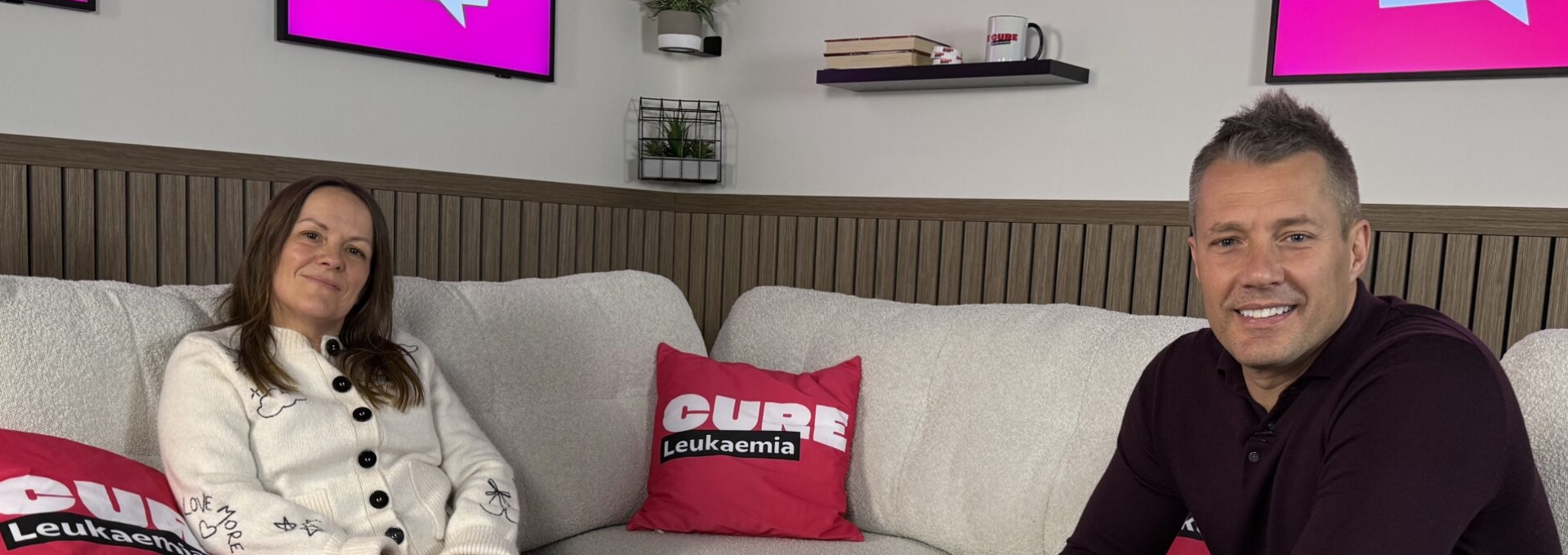
Jo Hawkridge – We Know Trials Save Children
In the latest episode of Cure Leukaemia’s Let’s Talk Blood Cancer: The Patients Podcast, host Adam Joyce sits down with Jo Hawkridge to share the story of her son Jude’s battle with Acute Lymphoblastic Leukaemia (ALL) and the clinical trial that ultimately saved his life. In the episode the following is covered:
Jude’s Symptoms
In early 2020, before the UK entered national lockdown, 7 year old Jude was living life to the fullest. A sporty, energetic child, he was always playing football and swimming. When he began complaining of feeling “weak”, suffering from leg pain.
Jude appeared unusually pale and began taking breaks during football and swimming, something he had never done before. Jo’s concerns that “something wasn’t quite right” prompted her to book a GP appointment. Before the appointment could take place, Jude collapsed at football and was taken to A&E with a suspected head injury. After Jo’s request for a blood test was denied, Jude was sent home.
Ten days later, a routine blood test at the local hospital changed everything. By early evening, Jude’s doctor was at the family’s door asking for Jude to be brought in immediately. Jude was later diagnosed with Acute Lymphoblastic Leukaemia. While his parents struggled to process the news, Jude’s first question to his doctor was, “Am I going to die?”
Jude’s Treatment
Treatment began within an hour at Sheffield Children’s Hospital. Jude started on the lowest level of chemotherapy but failed to respond as hoped. He was quickly escalated to more intensive treatment, yet after several weeks, Jo and her husband Jim were told chemotherapy would not be enough to cure their son.
Doctors presented two further options, CAR-T therapy or a bone marrow transplant. Jude’s sister, Lily, was found to be a perfect 10/10 match for transplant, but the family opted first for CAR-T therapy, a less invasive approach. Jo and Jude spent six weeks in isolation in Manchester while he received the treatment. During that time, Jo sensed it had not worked. Jude appeared almost “too well” and was “bouncing off the walls”.
Isolation also took a heavy emotional toll. The family was separated for long periods, with Jo unable to spend crucial time with Lily, who was just 10 years old. “The main thing that affected us all was not being able to be a family of four.”
When CAR-T therapy failed, Jude underwent a bone marrow transplant using Lily’s donated cells. The transplant initially brought the news everyone had hoped for: Jude was in remission. But the relief was short-lived. Complications arose when the donor cells attacked Jude’s body, and the medication required to control this reaction ultimately caused his leukaemia to return.
With standard treatments exhausted, the family were told of a clinical trial that might be available. Jo describes it as their final hope, something they would have done “anything” to access. The trial required another three months in isolation in Manchester. This time, the outcome was different. After being unwell for a long spell, Jude began responding positively and was discharged just days after improvement was seen.
Looking Forward
Jo firmly believes that without access to a clinical trial, her son would not be here. Sharing her family’s experience, she highlights the vital importance of funding innovative treatments and supporting networks such as ATICUS and Cure Leukaemia, which help bring pioneering trials to children who desperately need them.